
Ever rummaged through a dusty coin jar and pulled out one of those classic Lincoln cents with wheat ears on the back? The Wheat Penny Price Guide 1909-1958 lays out the value of Wheat Pennies by year, helping you spot pocket change that could turn into serious cash. These coins, minted over nearly 50 years, mix everyday affordability with jaw-dropping rarities that auction houses chase in 2026. You might have a few tucked away from the 1940s or 1950s, thinking they’re just old coppers. But dive into the Wheat Penny Price Guide 1909-1958, and you’ll see why condition, mint marks, and tiny varieties flip a 1-cent piece into five figures or more. With collector demand spiking amid economic shifts, now’s prime time to check your stash.
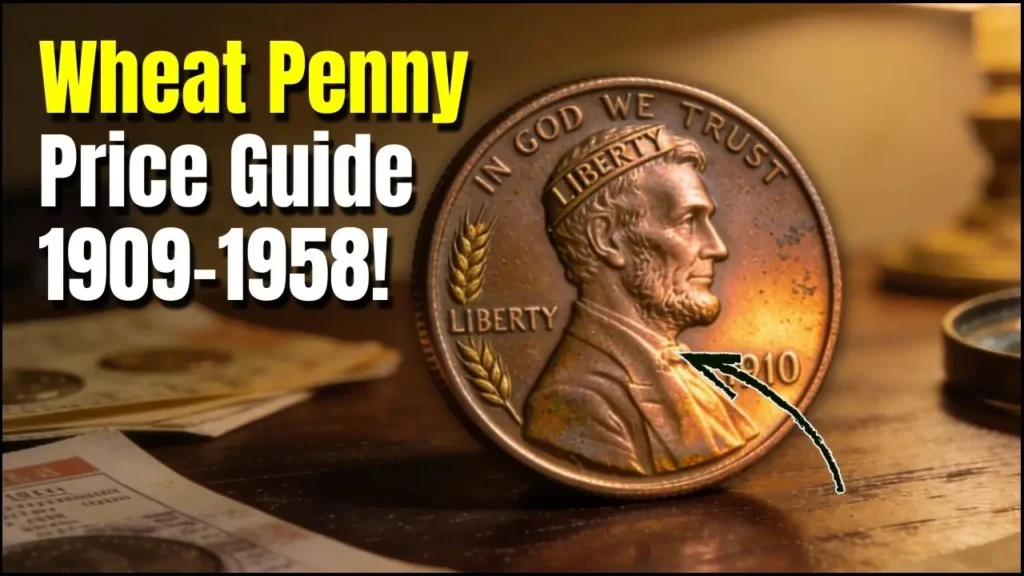
New collectors always hunt for the Wheat Penny Price Guide 1909-1958 to make sense of this iconic series. Spanning 1909 to 1958, these Lincolns range from dirt-cheap circulated beaters worth face value to pristine gems fetching thousands at recent shows. Key drivers include low-mintage dates from branch mints, eye-catching errors like doubled dies, and original red color that screams premium. Auction trends through 2025-2026 show 10-20% jumps for top grades, fueled by set builders and investors. Whether grading your own or buying certified, this roadmap points to smart picks without the guesswork. Focus on keys like 1909-S VDB or 1955 DDO for fastest returns.
Wheat Penny Price Guide 1909-1958
| Year/Key Variety | Circulated (G-VG) | Average (XF) | Mint State (MS-63/64) | Gem (MS-65+) |
|---|---|---|---|---|
| 1909 VDB | $10–$100 | $200–$500 | $1,000–$3,000 | $10,000+ |
| 1909-S VDB | $50–$300 | $500–$1,000 | $2,000–$5,000 | $20,000+ |
| 1914-D | $50–$200 | $500–$2,000 | $5,000–$10,000 | $50,000+ |
| 1922-D (No D) | $150–$500 | $1,000–$2,500 | $5,000–$10,000 | $30,000+ |
| 1931-S | $50–$150 | $300–$800 | $1,000–$3,000 | $10,000+ |
| 1943 Bronze | $100,000+ | $300,000+ | $500,000+ | $1M+ |
| 1943 Steel | $0.10–$1 | $2–$5 | $10–$20 | $50+ |
| 1955 DDO | $500–$1,500 | $3,000–$5,000 | $10,000–$20,000 | $100,000+ |
The Beginnings Of The Wheat Penny (1909–1919)
- The Wheat Penny story starts in 1909, celebrating Abraham Lincoln’s 100th birthday. Designer Victor David Brenner put his VDB initials on the reverse, but public outcry led to quick removal, creating instant varieties. That 1909 VDB? Common in low grades, but red MS-65s climb past $10,000 as gateways to the Wheat Penny Price Guide 1909-1958.
- Branch mint stars shine brightest here. The 1909-S VDB, with just 484,000 minted, pulls $50 in good condition but explodes to $20,000+ in Gem. Fast-forward to 1914-D from Denver1.2 million total keeps it semi-key. Worn examples trade hands at $100, while uncirculated reds hit $50,000. Collectors love these early years for sharp strikes and history; Philly coins fill gaps cheaply, but S and D marks build real equity.
- Don’t sleep on 1916-S either. Low mintage under 22 million pairs with wartime demand, pushing XF to $300 and MS-64 to $2,000. Dive into rolls from estates; these openers pack value without breaking banks. As sets fill from the front, prices firm up yearly.
The Roaring Twenties and Thirties (1920–1939)
- Production boomed in the 1920s, with billions poured into circulation. Most dates hover near face value in circulated shape, but savvy hunters target anomalies in the Wheat Penny Price Guide 1909-1958. Take the infamous 1922-D No D die erosion wiped the mint mark on thousands, turning a common into a $500 circulated prize. Uncirculated versions? $10,000 to $30,000 easy.
- Depression squeezed mintages low by 1931-S, barely 866,000 from San Francisco. Even average circulated grabs $100, jumping to $3,000 in MS-63. Red gems top $10,000, rewarding patient graders. Philly runs stayed high, but branch issues like 1926-S (less than 4 million) offer $20 circulated and $1,500 mid-grades.
- The 1930s layered challenges; economic woes cut output, spotlighting dates like 1931-S alongside sleeper 1924-D. Strong details from fresh dies help high-end values soar always eye color, as brown tones drag premiums down 50% versus full red. These decades reward variety chasers, blending affordability with upside.
The World War Ii Era and Beyond (1940–1958)
- World War II shook things up big time. Copper shortages forced 1943 steel cents over a billion made, staying under $1 circulated. But those rogue bronze strikes? Ultra-rare war errors netting $100,000 minimum, with auction peaks over $1 million. They headline any Wheat Penny Price Guide 1909-1958 discussion.
- Post-war flooded markets again, dropping most 1944-1958 values to pennies in bulk. Yet 1944 Steel holdouts or 1955 Doubled Die Obverse buck trends hard. That 1955 DDO, with chunky doubling on date and motto, starts at $1,000 worn and rockets to $100,000+ in top tiers 2026 sales confirm steady climbs.
- Late Denver and San Francisco pieces like 1958-D provide cheap set fillers, but red MS-65 examples nudge $100. Errors pepper the endgame: 1944-D/S over-mints or 1958 Wide AM proofs add spice. Full Red designation multiplies values fivefold; store yours in albums away from air to preserve luster.
Wheat Penny Market Trends
- Condition census rules the Wheat Penny Price Guide 1909-1958 roost. PCGS or NGC slabs in MS-65 Red often fetch 10-20 times raw circulated prices. Color matters most original ruby red outpaces chocolate brown by huge margins, with full orange peel toning pushing records.
- 2026 trends lean toward varieties Repatched mint marks like 1920-D RPM or doubled dies beyond 1955 heat up fast. Auction houses like Heritage report 15% yearly gains on keys, driven by millennial collectors and registry sets. Full date runs in 65-66 grades lag supply, propping commons higher too.
- Buy low-grade keys to upgrade later; sell peaks via eBay or shows after certification. Fakes plague the market check VDB spacing or DDO thickness under magnification. Long-term, silver-like appreciation awaits patient holders as fewer survive untouched.
- Building a set? Start with 1909-1920 keys, fold in semi-keys, finish common tail ends. Wholesale rolls yield sleepers, estate sales uncover hoards. Track Greysheet bids for flips but hold registry contenders. These Lincolns blend nostalgia, history, and profit perfect hobby fuel.
FAQs about Wheat Penny Price Guide 1909-1958
What Makes a Wheat Penny Valuable?
Mint mark, date rarity, condition, and color drive prices. Low-mintage S or D coins in red uncirculated top charts.
How Do I Grade My Wheat Penny?
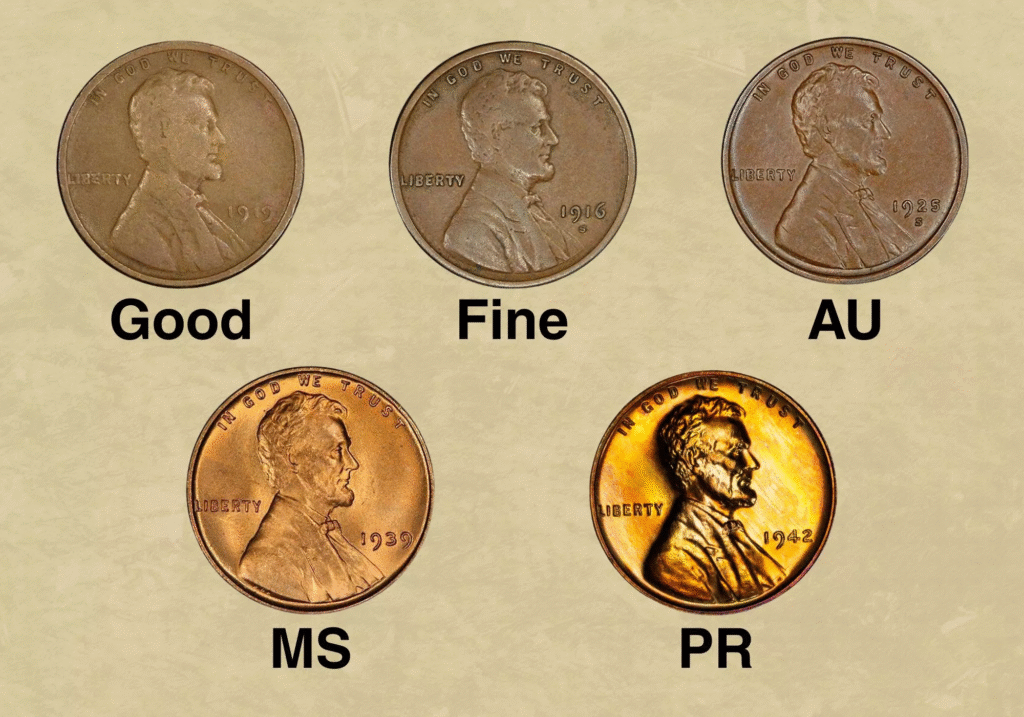
Eyeball wear Circulated shows flatness, AU has luster with rubs, MS sparkles untouched. Send top suspects to PCGS/NGC.
Are Wheat Pennies Still Being Found in Circulation?
Rarely post-1982, but old hoards surface in change or jars. Steel 1943s pop up cheap.
Can Beginners Profit from Wheat Pennies?
Absolutely, buy circulated keys under $200, upgrade over time. Wholesale lots beat retail markups.
