

Claims that a sweeping New U.S. Driving License Rule will take effect nationwide on Jan. 1, 2026, have circulated widely online. However, U.S. transportation officials and independent fact-checkers say no single federal rule targets drivers over 70. Instead, a series of state-level changes—some beginning in 2026—are reshaping how older Americans renew their licenses.
New U.S. Driving License Rule
| Key Fact | Detail/Statistic |
|---|---|
| No nationwide age-based rule starts Jan. 1, 2026 | U.S. driver licensing is primarily regulated by states; federal agencies do not issue age-based driving mandates |
| REAL ID is often confused with senior-driving policies | REAL ID governs ID standards for certain federal uses, not senior driving ability requirements |
| State rules for older drivers vary | Some states require in-person renewal, vision tests, or shorter renewal intervals for older drivers |
| Older-driver safety risk is complex | Many seniors drive cautiously, but injury risk rises with age and frailty in crashes |
| Public health and safety agencies track older-driver trends | The number of older licensed drivers has increased over time, shaping policy reviews |
No Nationwide Rule Takes Effect on Jan. 1, 2026
Despite viral headlines and social media posts, federal agencies confirm there is no nationwide New U.S. Driving License Rule scheduled to take effect on Jan. 1, 2026.
In the United States, the authority to issue, renew, suspend, or revoke driver’s licenses rests almost entirely with individual states. The federal government plays a limited role, primarily setting standards for identification used for federal purposes, such as boarding commercial aircraft or entering secure facilities.
Transportation officials say this division of authority has not changed. Any claim suggesting a single, age-based federal driving mandate misunderstands how the U.S. licensing system works.
Independent fact-checking organizations have repeatedly debunked claims that drivers over 70 will automatically lose their licenses or be required to pass new federal driving tests in 2026.
Why the Rumors Spread So Widely
Experts say confusion surrounding the New U.S. Driving License Rule has been fueled by three overlapping developments.
First, the continued rollout of REAL ID requirements has led many Americans to assume new federal control over driver licensing. Second, several states have announced updates to senior renewal rules effective in 2026, which has created the impression of a coordinated national shift. Third, misleading headlines and social media posts have amplified fears among older drivers.
“People tend to assume that if multiple states change rules around the same time, it must be federal,” said a transportation policy analyst familiar with state licensing systems. “That is not how U.S. driver regulation works.”
What Is Actually Changing: State-Level License Rules
While there is no federal mandate, state governments are actively revising license renewal rules for older drivers, with several changes scheduled to take effect in 2026.
State officials say these policies are driven by demographic trends. Americans are living longer, staying active later in life, and holding onto their licenses for more years than previous generations.
At the same time, states face pressure to address roadway safety as age-related medical conditions become more common among drivers in their 70s, 80s, and 90s.
“These policies are designed to identify risk early, not to remove driving privileges by default,” said a former senior researcher at a national road safety institute.
Common Changes Drivers Over 70 May See
More In-Person Renewals
One of the most noticeable elements of the New U.S. Driving License Rule discussion is the move toward mandatory in-person renewals for older drivers in some states.
In-person renewals allow licensing staff to verify identity, conduct vision screenings, and observe basic physical mobility. Many states previously allowed seniors to renew by mail or online for extended periods, a practice that some officials now say limits oversight.
Mandatory Vision Testing
Vision testing is already one of the most common age-related requirements in the U.S. licensing system. Several states now require drivers over 70 to pass a vision test at every renewal.
State transportation departments say these tests are simple and focus on visual acuity and field of vision rather than complex medical diagnostics.
Shorter Renewal Cycles
Another common change is shorter renewal periods for older drivers. Instead of renewing every six or eight years, some seniors may need to renew every two to four years.
Officials say shorter cycles allow more frequent monitoring without imposing additional testing requirements at every renewal.
Selective Road or Written Tests
Contrary to popular belief, most states do not impose automatic road tests based solely on age. However, some states reserve the right to require a driving or written test if there is a documented medical concern or safety complaint.
Illinois and Other States: Targeted Changes in 2026
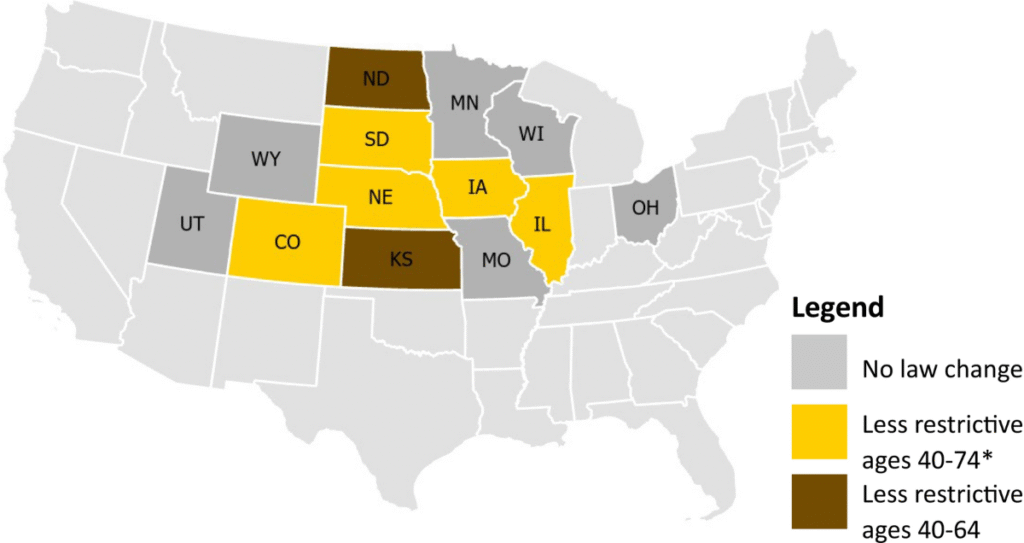
Illinois provides a clear example of how nuanced these policies can be. Under legislation passed earlier in the decade, Illinois eliminated automatic road tests for drivers aged 75 to 86, while retaining testing requirements at higher age thresholds.
State officials said the change was based on crash data showing no significant safety benefit from mandatory testing at those ages.
Other states are taking different approaches. Some are expanding vision-testing requirements, while others are reviewing physician reporting laws or family reporting mechanisms.
There is no uniform national model, and officials emphasize that differences reflect local driving conditions, population age profiles, and infrastructure.
How Medical Reporting Laws Fit In
An often-overlooked part of the New U.S. Driving License Rule conversation involves medical reporting laws.
In some states, physicians are permitted—or required—to report medical conditions that could impair driving ability, such as advanced dementia, severe vision loss, or seizure disorders. In other states, reporting is voluntary.
Public health experts say these laws are designed to balance patient privacy with public safety, but they can be controversial.
Advocacy groups for older Americans caution that overly aggressive reporting can discourage seniors from seeking medical care or discussing symptoms honestly with doctors.
Why States Are Revisiting Senior Driving Rules
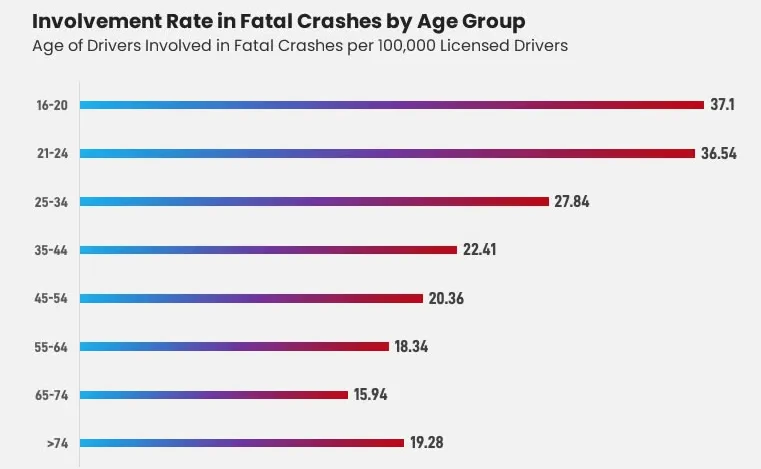
Federal and state data show that older drivers generally engage in safer driving behaviors than younger drivers. They are less likely to speed, drive under the influence, or engage in aggressive driving.
However, older adults are more vulnerable to injury in crashes due to physical fragility. Even low-speed collisions can result in serious harm.
Transportation researchers say this combination—lower crash frequency but higher injury severity—has prompted states to focus on early detection of impairments rather than punitive restrictions.
The Economic and Social Impact of License Loss
Experts note that losing a driver’s license can have serious consequences for older adults, particularly in rural and suburban areas with limited public transportation.
Studies have linked driving cessation to increased social isolation, reduced access to healthcare, and higher rates of depression among seniors.
For this reason, many states pair stricter renewal rules with programs designed to help older adults transition safely when driving is no longer viable.
Alternative Transportation and Mobility Programs
Several states and municipalities have expanded mobility programs aimed at seniors who reduce or stop driving.
These include subsidized ride-share services, volunteer driver programs, and partnerships with public transit agencies. Some states also offer driver refresher courses that can extend license validity or reduce insurance costs.
Transportation advocates say these programs are a critical—but often underfunded—part of the broader policy discussion.
What Drivers Over 70 Should Do Now
Transportation officials and safety experts recommend that older drivers take proactive steps well before their next renewal:
- Review state DMV renewal rules annually
- Schedule routine vision and hearing exams
- Consider voluntary driver safety courses
- Discuss long-term mobility plans with family members
Experts emphasize that preparation can reduce stress and prevent last-minute complications at renewal time.
Looking Ahead
As the U.S. population continues to age, policymakers expect ongoing debate over how best to balance independence, safety, and fairness.
For now, officials stress that the New U.S. Driving License Rule narrative should be understood as a collection of state-level adjustments—not a sweeping federal mandate.
Future changes are likely to remain incremental, data-driven, and highly localized.
FAQ
Is there a federal driving test for seniors starting Jan. 1, 2026?
No. Federal agencies confirm there is no nationwide, age-based driving test or license revocation rule.
Do all states require vision tests for drivers over 70?
No. Requirements vary by state, though vision testing is increasingly common.
Can family members report unsafe drivers?
Some states allow family or law enforcement to submit safety concerns, which may trigger a review.
Will seniors automatically lose their licenses at a certain age?
No state automatically revokes licenses based solely on age.
